
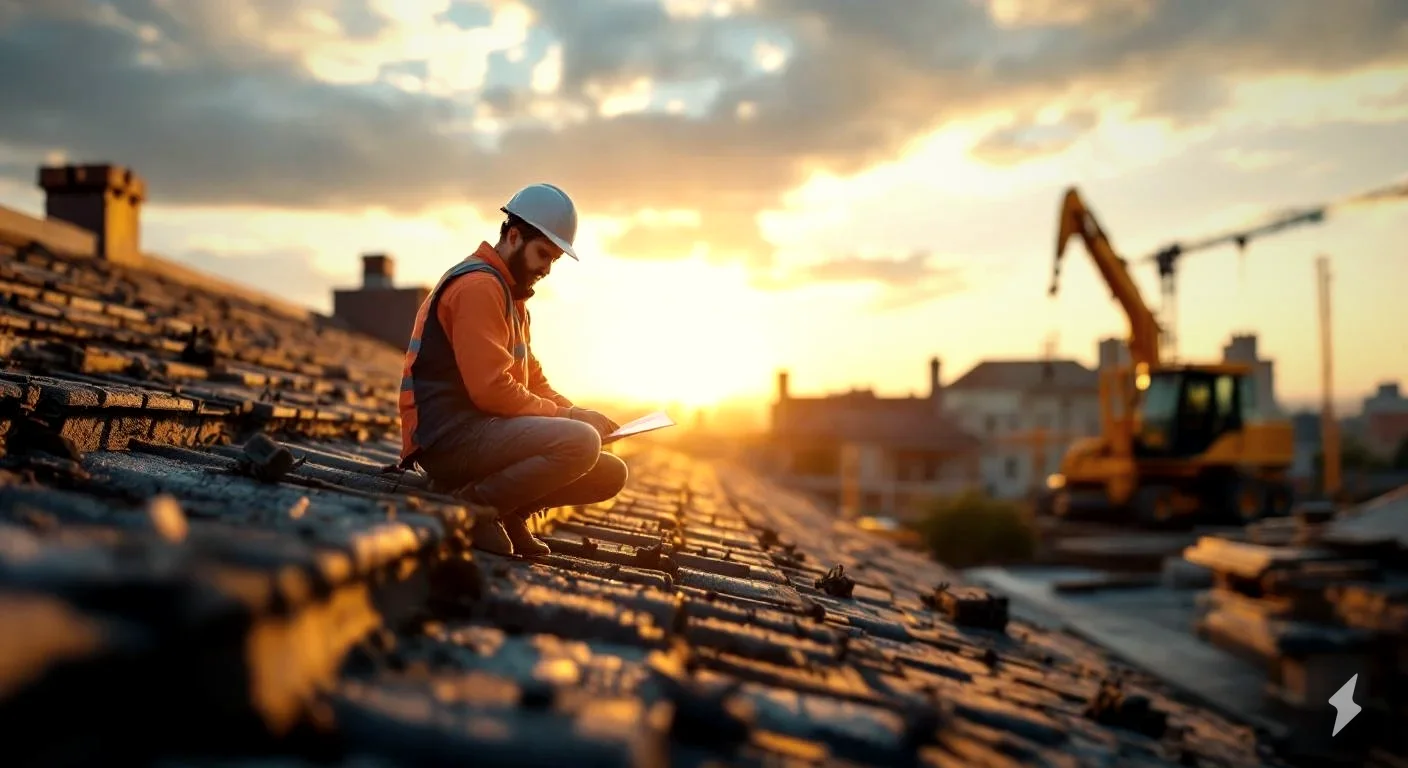
The roof was shot. Granules in the gutters, three soft spots near the chimney, and a homeowner standing in the driveway holding three bids that were $8,400 apart. “Brad, which one is right?” I asked him to let me read all three out loud. The cheapest one skipped tear-off entirely. It also left off flashing and permits. That “deal” would have cost him $6,000 in change orders once the first roofer popped the old shingles and saw what I’d already seen from the ground.
That’s why searching “roof estimates near me” and taking the lowest number is the fastest way to get burned on a roof.
Quick Answer
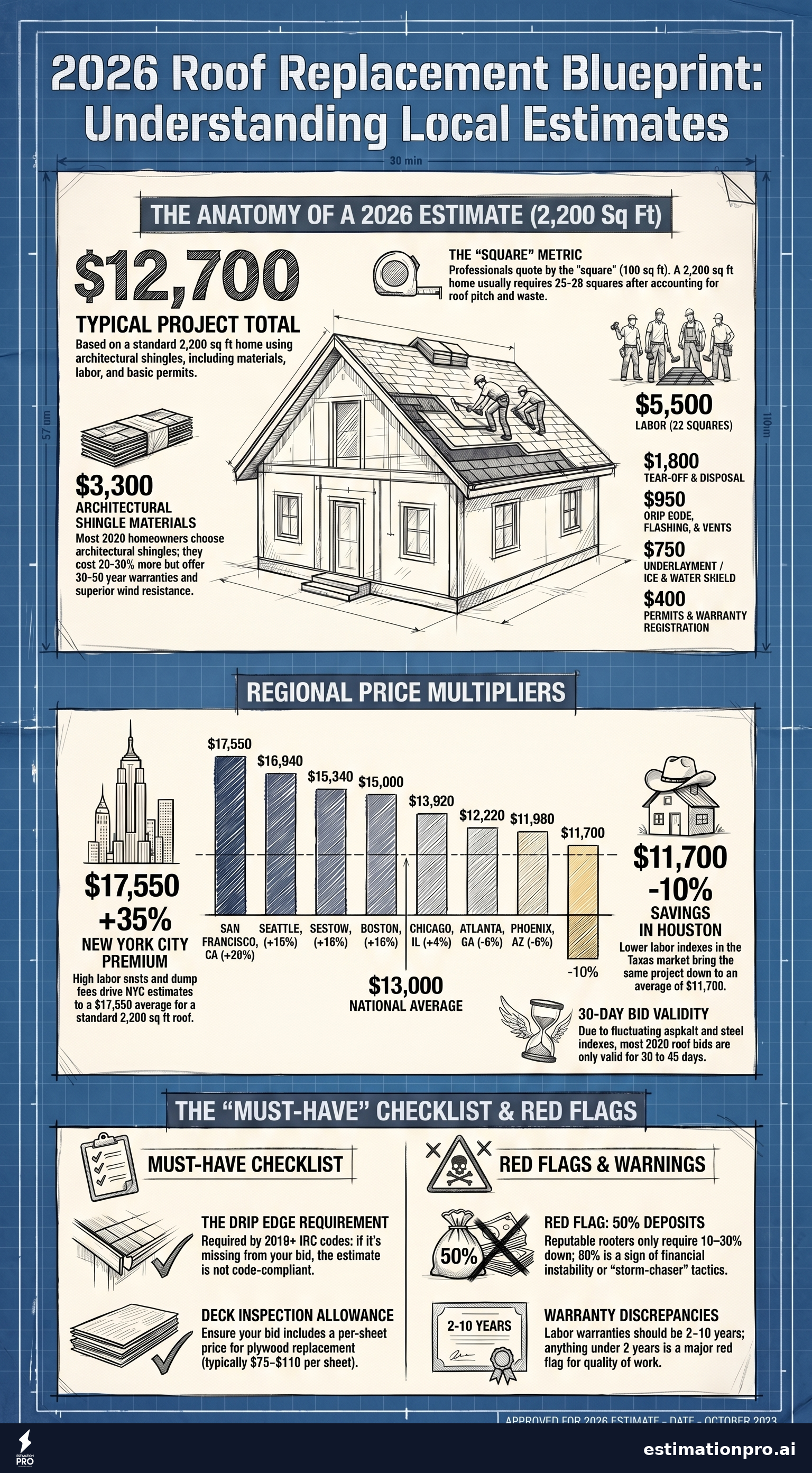
A legitimate local roof estimate for a 2,200 square foot home runs $9,500 to $18,000 for architectural shingles in most US metros. The bid must itemize tear-off, underlayment, flashing, drip edge, ridge vents, labor, permits, cleanup, and warranty terms. If any of those line items are missing, the number is not complete and the difference will show up as a change order. Expect regional swings of 15 to 35 percent based on your metro. Try EstimationPro free if you are a contractor writing roof bids and want every line item pre-filled so you stop leaving money on the table.
What a Real Roof Estimate Must Include
I’ve been writing and reading remodeling bids for 20 plus years. A proper roof estimate is never one number on a napkin. It is a line-item scope with measurable quantities. Use this checklist when you compare local bids.
- Total roof area in squares (one square = 100 sq ft). The estimate should state the exact number. A 2,200 sq ft home with a 6/12 pitch is usually 25 to 28 squares once you add pitch factor and waste.
- Tear-off scope. One layer, two layers, or overlay allowed. Disposal fees and dump tickets.
- Deck inspection and plywood replacement allowance. Most PNW and Northeast homes need at least a few sheets. Expect $75 to $110 per sheet installed.
- Underlayment type. Synthetic felt, #30 felt, or ice and water shield at eaves and valleys.
- Flashing. Step flashing at walls, counter flashing at chimneys, new pipe boots.
- Drip edge. Required by most 2018 and newer IRC codes. If it’s missing, the bid is not code compliant.
- Ventilation. Ridge vent, box vents, or power vent. Match intake to exhaust.
- Shingle material, brand, color, and manufacturer warranty.
- Labor warranty (separate from manufacturer). 2 to 10 years is typical. Anything under 2 years is a red flag.
- Permits, HOA approvals, and inspection fees.
- Cleanup, magnetic sweep, and dumpster placement.
- Payment schedule. 10 to 30 percent deposit, progress draws, final on completion. No reputable roofer asks for 50 percent up front.
If a local bid skips three or more of those items, throw it out. You are not comparing the same job.
Typical Roof Replacement Costs Near You
These ranges come from Angi’s 2026 roofing guide, HomeAdvisor 2025 to 2026 data, and my own bid history in the Pacific Northwest. A “square” equals 100 square feet of roof area, which is how pros quote material.
| Material | Material Only (per square) | Installed (per sq ft) | 2,200 sq ft Total Installed |
|---|---|---|---|
| 3-tab asphalt | $70 to $200 | $3 to $5 | $6,600 to $11,000 |
| Architectural shingles | $100 to $250 | $4 to $7 | $8,800 to $15,400 |
| Metal roofing | $120 to $900 | $4 to $30 | $8,800 to $66,000 |
Most homeowners land on architectural shingles. They carry a 30 to 50 year manufacturer warranty, hold up in wind better than 3-tab, and only cost 20 to 30 percent more installed. Source: Owens Corning and GAF product spec sheets, 2025 to 2026 editions.
Regional pricing disclaimer: The ranges above are national averages. Your local bid can swing 15 to 35 percent either way based on wages, dump fees, and demand.
Share This Infographic
Feel free to share this infographic on your website. Just copy the embed code below:
Copy this embed code:
<a href="https://estimationpro.ai/tools/blog/roof-estimates-near-me" target="_blank" rel="noopener">
  <img src="https://estimationpro.ai/tools/blog/infographics/roof-estimates-near-me-infographic.png" alt="roof estimates near me infographic by EstimationPro.AI" style="max-width:100%;height:auto" loading="lazy" />
</a>
<p style="font-size:12px;color:#64748B;margin-top:8px">Source: <a href="https://estimationpro.ai/tools/blog/roof-estimates-near-me">EstimationPro.AI</a></p>
Regional Cost Multipliers by Metro
Labor is the biggest reason roof estimates vary so much between cities. BLS 2025 wage data and RSMeans 2026 city cost indexes tell the story. Apply the multiplier to a national average base cost of $13,000 for a 2,200 sq ft architectural shingle replacement.
| Metro | Multiplier vs National | Est. 2,200 sq ft Replacement |
|---|---|---|
| New York, NY | +35% | $17,550 |
| San Francisco, CA | +28% | $16,640 |
| Los Angeles, CA | +22% | $15,860 |
| Seattle, WA | +18% | $15,340 |
| Boston, MA | +16% | $15,080 |
| Denver, CO | +5% | $13,650 |
| Chicago, IL | +4% | $13,520 |
| Atlanta, GA | -6% | $12,220 |
| Phoenix, AZ | -8% | $11,960 |
| Houston, TX | -10% | $11,700 |
Sources: BLS Occupational Employment Statistics for Roofers (SOC 47-2181), May 2025 release. RSMeans 2026 City Cost Index. Field experience across the PNW, Alaska, and Colorado markets.
Worked Example 1: Seattle Single-Story Rambler
Jim’s house in Ballard. 2,200 sq ft footprint, 4/12 pitch, 24 squares after pitch and waste. Architectural shingles, full tear-off of one layer, 6 sheets of plywood replaced, ice and water at eaves plus valleys.
- Architectural shingle material: 24 squares x $150 = $3,600
- Tear-off and dump: $1,900 (one layer, one dumpster)
- Plywood replacement: 6 sheets x $95 = $570
- Underlayment and ice/water shield: $820
- Drip edge, step flashing, pipe boots, ridge vent: $1,050
- Labor at $250 per square: 24 x $250 = $6,000
- Permit and cleanup: $450
Subtotal: $14,390. Seattle multiplier applied (+18%) to a national baseline puts this job squarely in the expected range. I’d bid this at $14,500 flat and sleep fine.
Worked Example 2: Phoenix Two-Story with Metal Panels
Maria’s house in Scottsdale. 2,400 sq ft, 5/12 pitch, 28 squares. She wants standing seam metal. Hot climate. Radiant barrier underlayment makes sense here.
- Metal roofing material (mid-grade standing seam): 28 squares x $550 = $15,400
- Tear-off of existing asphalt: $2,100
- Radiant barrier underlayment: $1,400
- Drip edge, flashing, snow guards (optional), ridge cap: $1,800
- Labor at $400 per square (metal is slower): 28 x $400 = $11,200
- Permit, HOA submittal, cleanup: $650
Subtotal: $32,550. Phoenix multiplier (-8%) applied to a national metal baseline. Metal in Arizona pays back in 10 to 15 years through reduced AC load. I walked her through that math and she pulled the trigger.
Red Flags in Local Roof Estimates
Based on my own bid reviews for friends, family, and clients who asked me to second-opinion their roofer. If you see any of these in a local bid, walk away.
- Price only, no line items. “Roof replacement: $8,900” is not a bid. It is a guess.
- Storm-chaser pressure. Knocked on your door after a hail event, wants a signed contract today, mentions “free roof from insurance.” Your insurance carrier decides, not them.
- No physical address or license number on the bid. Verify the license with your state contractor board.
- 50 percent deposit. Reputable local roofers do 10 to 30 percent. Anything higher says they need your money to buy material for the last customer’s job.
- No permit included. Skipping permits saves $300 and voids your homeowners insurance claim if the roof fails.
- Tear-off skipped on a 20-plus year old roof. Overlays are allowed in some codes but they trap moisture and kill the new warranty. Not worth the $1,500 you save.
- Unknown shingle brand. Stick to GAF, Owens Corning, CertainTeed, Atlas, Malarkey, or IKO. Off-brand shingles save pennies and cost warranties.
- “Lifetime warranty” with no paperwork. Manufacturer warranties require registration, proper install, and documented ventilation. Ask for the SureNail, Golden Pledge, or SilverPledge registration number after completion.
How to Vet Local Roofers Before You Sign
Get three bids. That’s the baseline. I tell every client to do it even when they want to hire me on the spot.
- Pull the state license and confirm it is active.
- Check general liability insurance (minimum $1M per occurrence) and workers comp. Ask for the certificate emailed directly from the insurer, not a PDF the roofer sends.
- Ask for three local references from the last 12 months. Call at least one.
- Walk the property together before the bid. A roofer who writes a bid from Google satellite without setting foot on your roof is guessing.
- Read the contract. Look for the cancellation clause (3-day right of rescission is federal law for home improvement contracts).
- Confirm who does the work. Some “local” companies are sales shells that sub the entire job to crews from two states away.
For contractors writing bids, our Roofing Calculator runs your squares, waste factor, and material costs in under a minute so you can respond to homeowner calls before the competition does. Pair it with the Roofing Estimate Template to send a professional line-item proposal the same day.
Related Reading
FAQs
How much should a roof estimate cost near me? Estimates should be free. Local roofers who charge for bids are usually selling inspection services or trying to recover marketing costs. Angi and HomeAdvisor confirm most reputable roofers bid at no charge for replacements. Roof repair inspections under $500 may carry a small diagnostic fee, which is fair.
Why is one roof estimate thousands cheaper than the others? Almost always because it is missing scope. The cheap bid skipped tear-off, flashing, permits, or plywood allowance. Or the roofer is unlicensed and uninsured, which means you carry the liability if someone falls. I’ve seen this three times in the last year alone.
How long is a local roof estimate valid? Most bids are good for 30 days. Material prices move with asphalt and steel indexes, so expect a 3 to 8 percent adjustment on any bid older than 45 days. Ask the roofer to lock the price in writing when you sign.
Do I need multiple estimates for insurance claims? Your insurance company usually requires one estimate from a licensed roofer, plus their own adjuster’s measurement. Getting a second opinion still helps. Adjusters miss scope regularly, especially on hail and wind claims where flashing and decking damage hide under the shingles.
Can I use a national chain or should I hire a local roofer? Both can work. Nationals have bigger warranties and easier warranty claims if they stay in business. Local roofers usually have lower overhead and more flexibility on scope. What matters more is license, insurance, references, and written scope, not the logo on the truck.
Get Your Local Roof Bid Right the First Time
Every roof replacement I’ve ever done comes down to the same thing. The homeowner wins when the bid is honest, complete, and comparable. The contractor wins when the scope is tight and the payment terms are clear. Both sides lose when the cheapest bid hides the scope and turns into change orders after demo day.
If you are a roofer writing three or four bids a week and still losing jobs to faster competitors, the bottleneck is usually response time. Contractors using EstimationPro report sending polished line-item bids within 2 hours of the homeowner call, compared to the 2 to 3 day industry average. Try EstimationPro free and you’ll build the estimate, send the branded proposal, trigger automated follow-up sequences if the homeowner goes quiet, and invoice through Stripe once the job is signed. It’s the full workflow from first call to final payment, not just a calculator.
Pricing a job like this?
Get every line item priced for your area in a full estimate
Describe the job or snap a few photos. Send it from EstimationPro and it follows up with your client for you.
3 free estimates. No credit card.
Typical Local Roof Replacement (2,200 sq ft, architectural shingles)
Get Free Estimating Tips
Enter your email and we'll send you pro tips, cost data, and useful resources for contractors.
We'll send helpful resources and occasional tips. Unsubscribe anytime.
 EstimationPro AI For Contractors, By Contractors
 Save 2+ Hours on Every Estimate
Upload photos, record voice notes, and get AI-powered estimates with line items, material lists, and regional pricing.